- No mountaineering experience
- Little or no climbing
- Physical activity at least once a week
- No knowledge of the mountain environment
- No mountaineering experience
- Little or no climbing
- Physical activity at least once a week
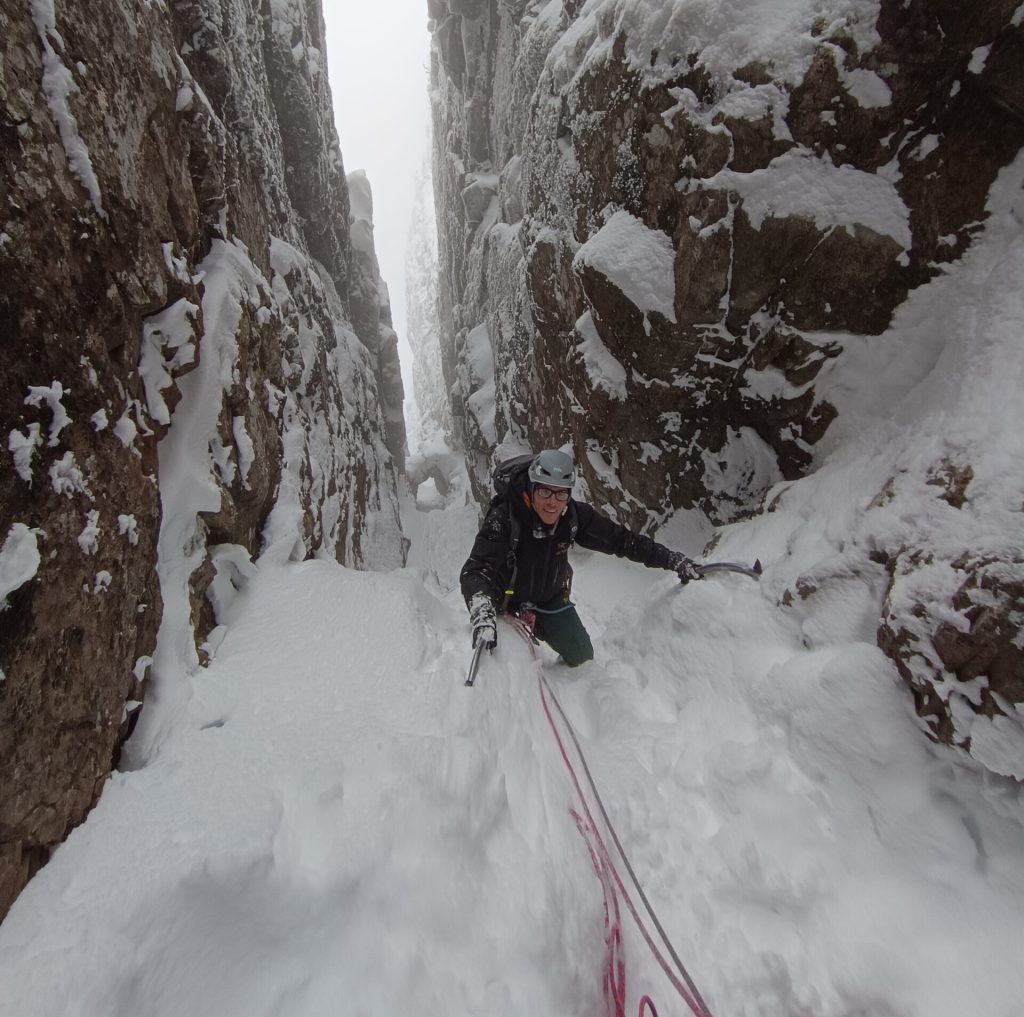
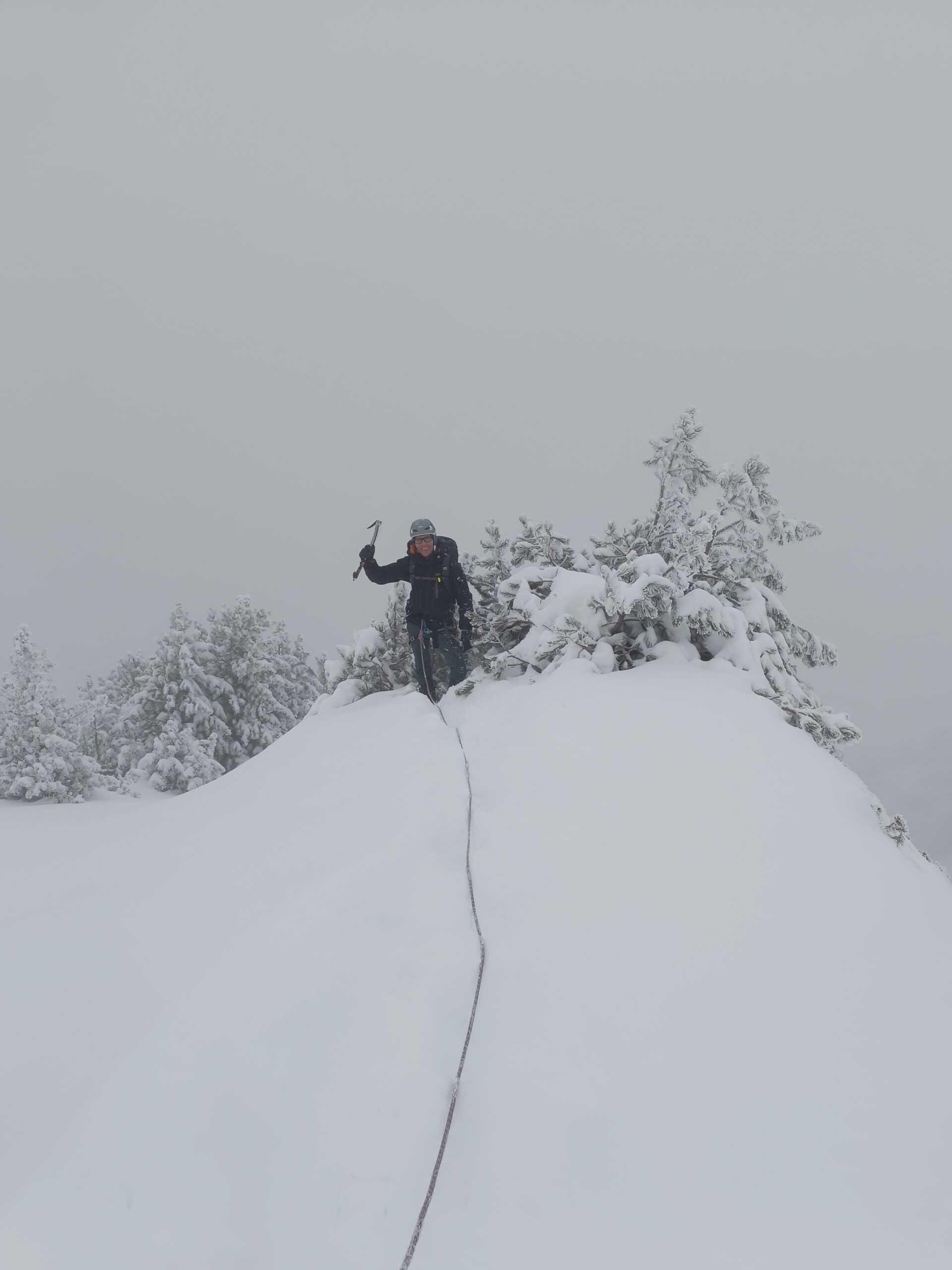
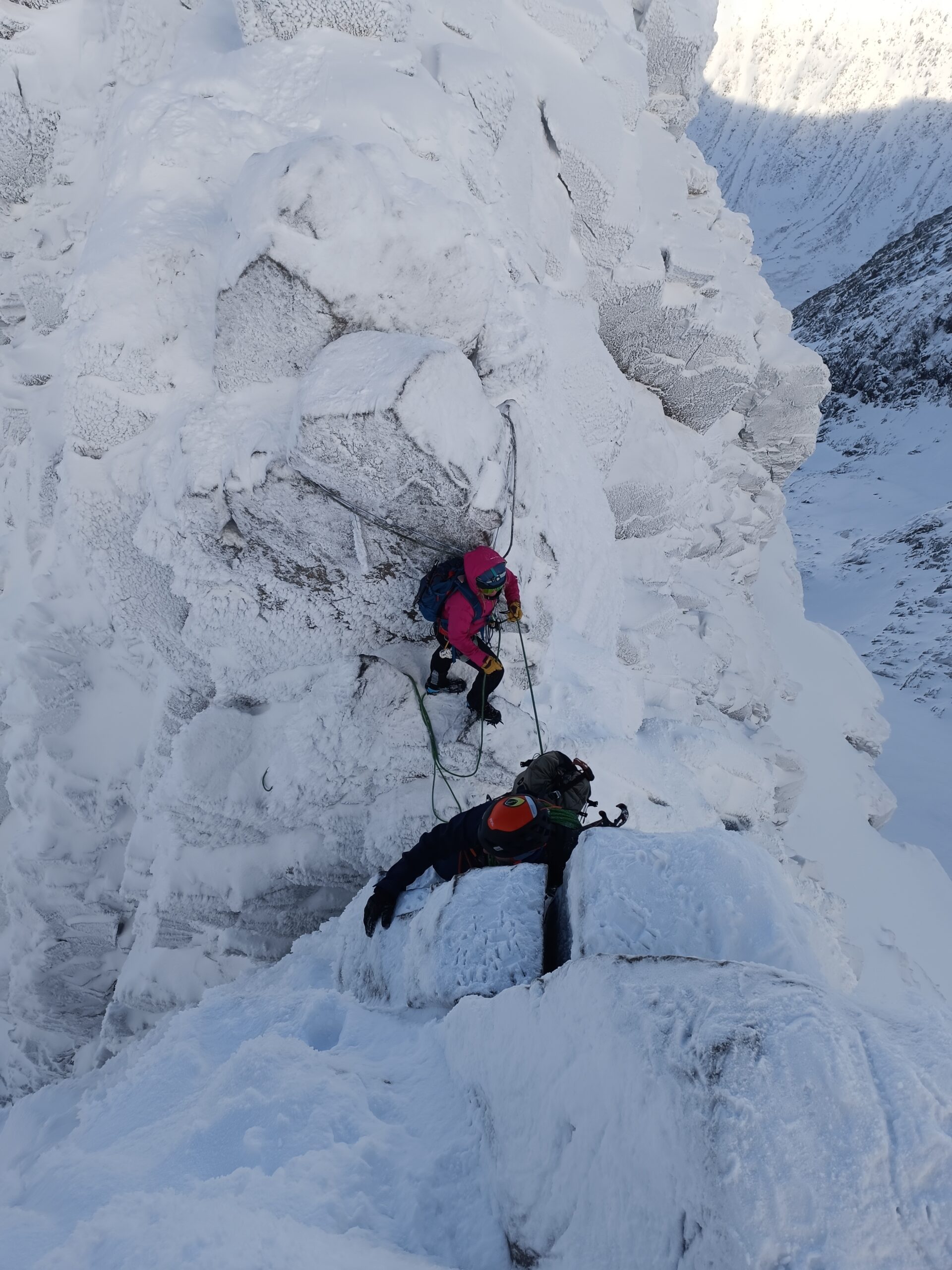
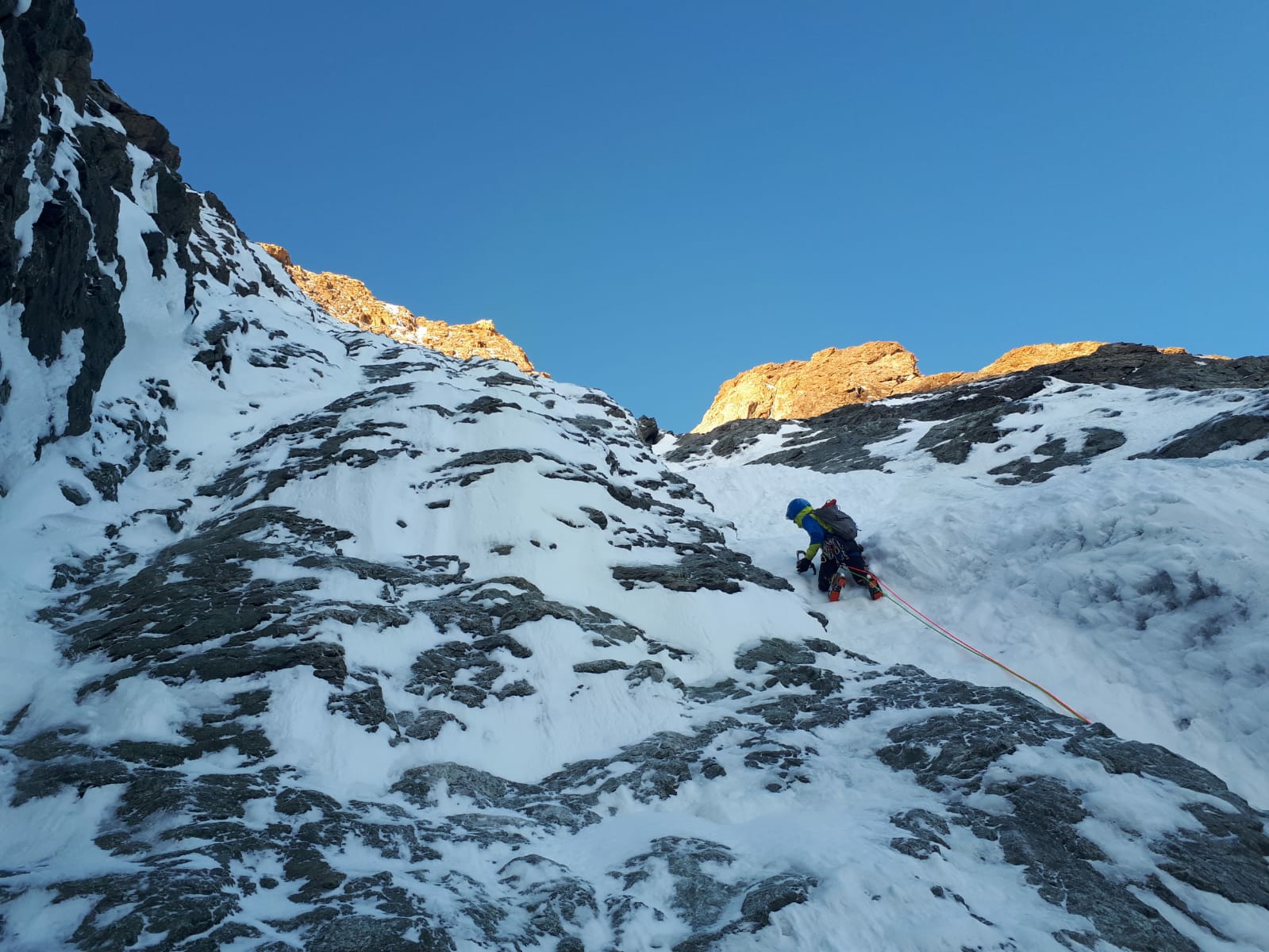
Winter completely transforms the mountain. Summer routes transform under the snow, while new possibilities emerge: snow-covered ridges, couloirs, crevasses, mixed routes, or routes where you alternate between hiking, cramponing, and climbing.
A day trip allows you to discover this universe without necessarily committing to a multi-day race.
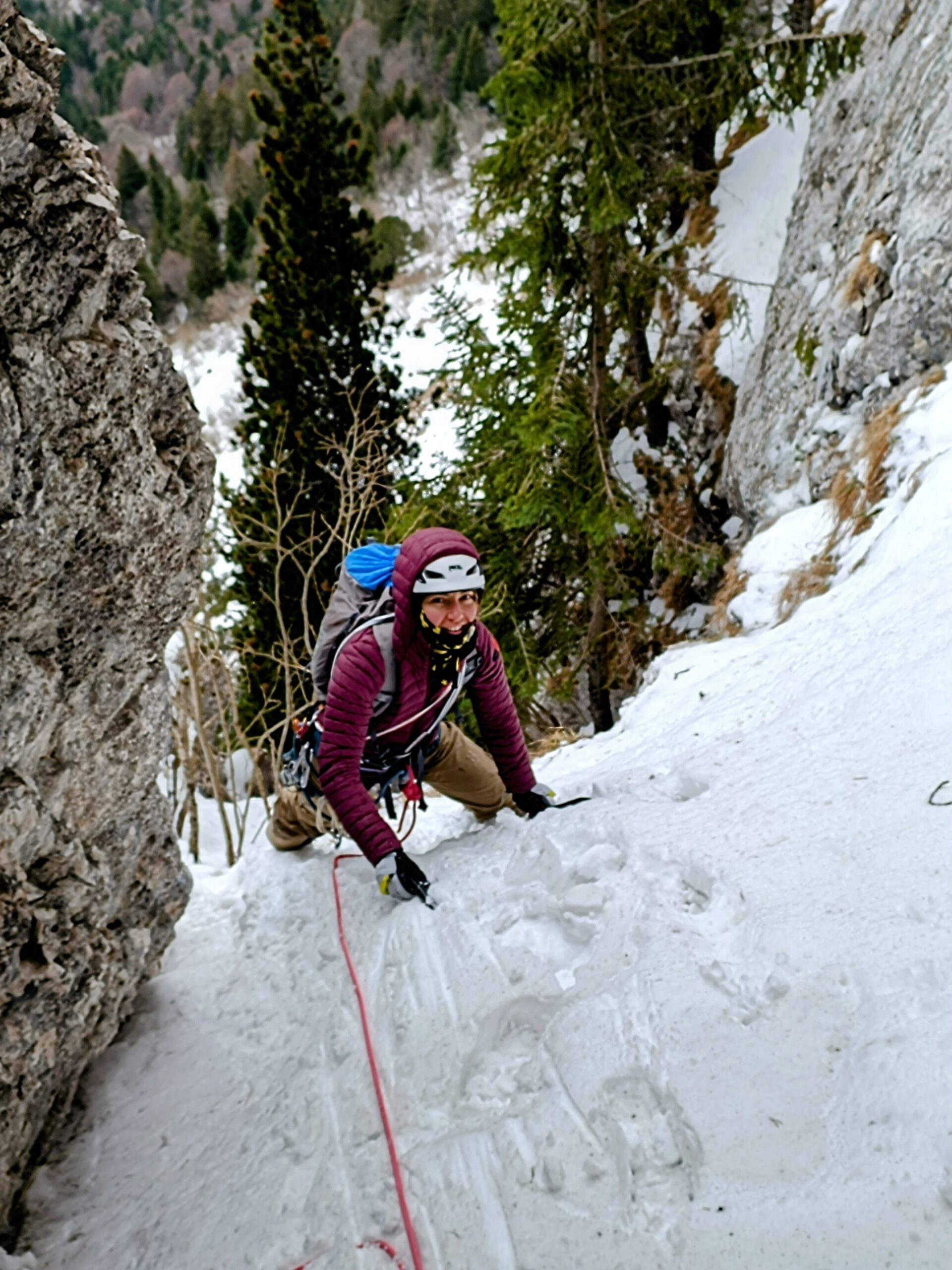
For a first experience, we can choose a route that allows us to gradually discover the winter techniques: moving with crampons, using the ice axe, progressing corded and reading the terrain.
For an already experienced climber, the day can, on the contrary, be dedicated to a more technical race. The choice then depends heavily on the current conditions. The same route can present very different difficulties depending on the amount of snow, ice, or wind conditions.
I can recommend trips in different mountain ranges in the Northern Alps: Belledonne, Bauges, Mont-Blanc.
We choose the terrain that offers the best opportunities on the day of the hike.
The experience in detail
After checking the conditions and choosing the route, we tackle the equipment and techniques necessary for the outing.
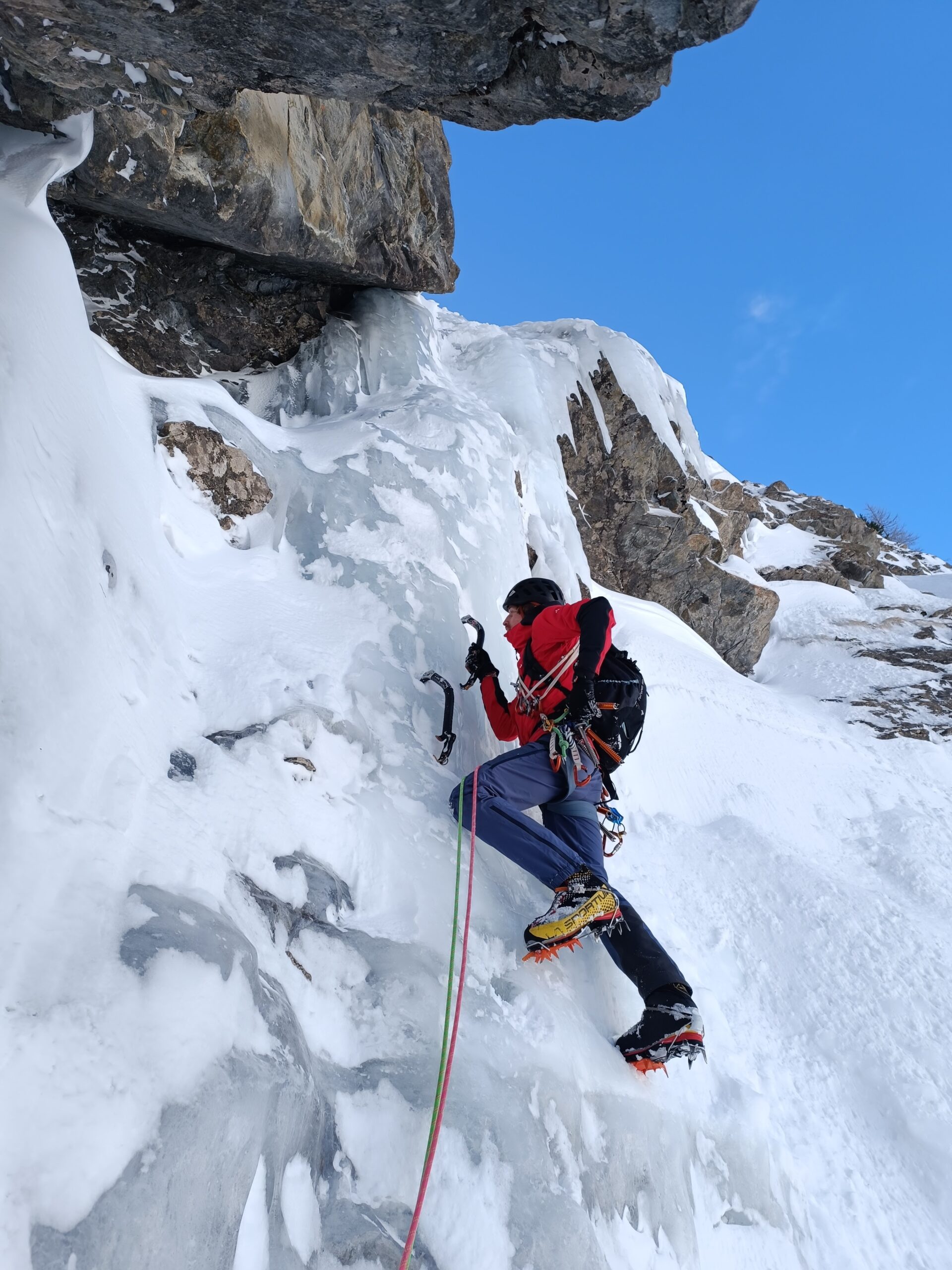
Depending on the terrain, we can work on foot positioning with crampons, the use of the ice axe, corded progression, and safety techniques adapted to the terrain encountered.
The goal is to discover the peculiarities of winter mountaineering while completing a real race, with a difficulty adapted to your experience.
For already experienced climbers, the day can be structured around a specific goal: a snowy ridge, a couloir, a crevasse, or a mixed route.
The difficulty sought is defined based on your experience and desires. The final choice then depends on the circumstances encountered.
An initial route planned can thus be replaced by another run in the same massif, or by another sector, if the conditions are not sufficiently good.
The choice depends, in particular, on the altitude, the snow cover, the weather and the ice conditions.
Yes, some routes allow you to discover mountaineering in winter for the first time. However, the choice of the race depends on your experience in the mountains, your physical condition, and the current conditions.
Winter mountaineering encompasses various terrains: snow, ice, snow-covered rock and mixed terrain. A day can take the form of a ridge, a couloir, a gully and often a combination of all of these!
Not necessarily for an initiation. The basic techniques can be learned during the outing. For more technical courses, prior experience may be necessary.
The icefall consists mainly of climbing over ice lines. Winter mountaineering can involve ice, but also snow, rock, and mixed terrain. The routes are therefore often more varied.
Yes. Many ridges, gullies, corridors and mixed routes can be covered in a day. The length and difficulty of the race are adapted to the group's level.
The route can be modified. In winter, wind, snow, sleet, temperatures and ice conditions can quickly change the characteristics of a race. The choice of terrain is therefore adjusted at the last moment if necessary.
Live with your guide, from first contact to the summit.
Creative and flexible
A flexible framework for devising the most appropriate itinerary or activity for each day, depending on the group and the conditions.